

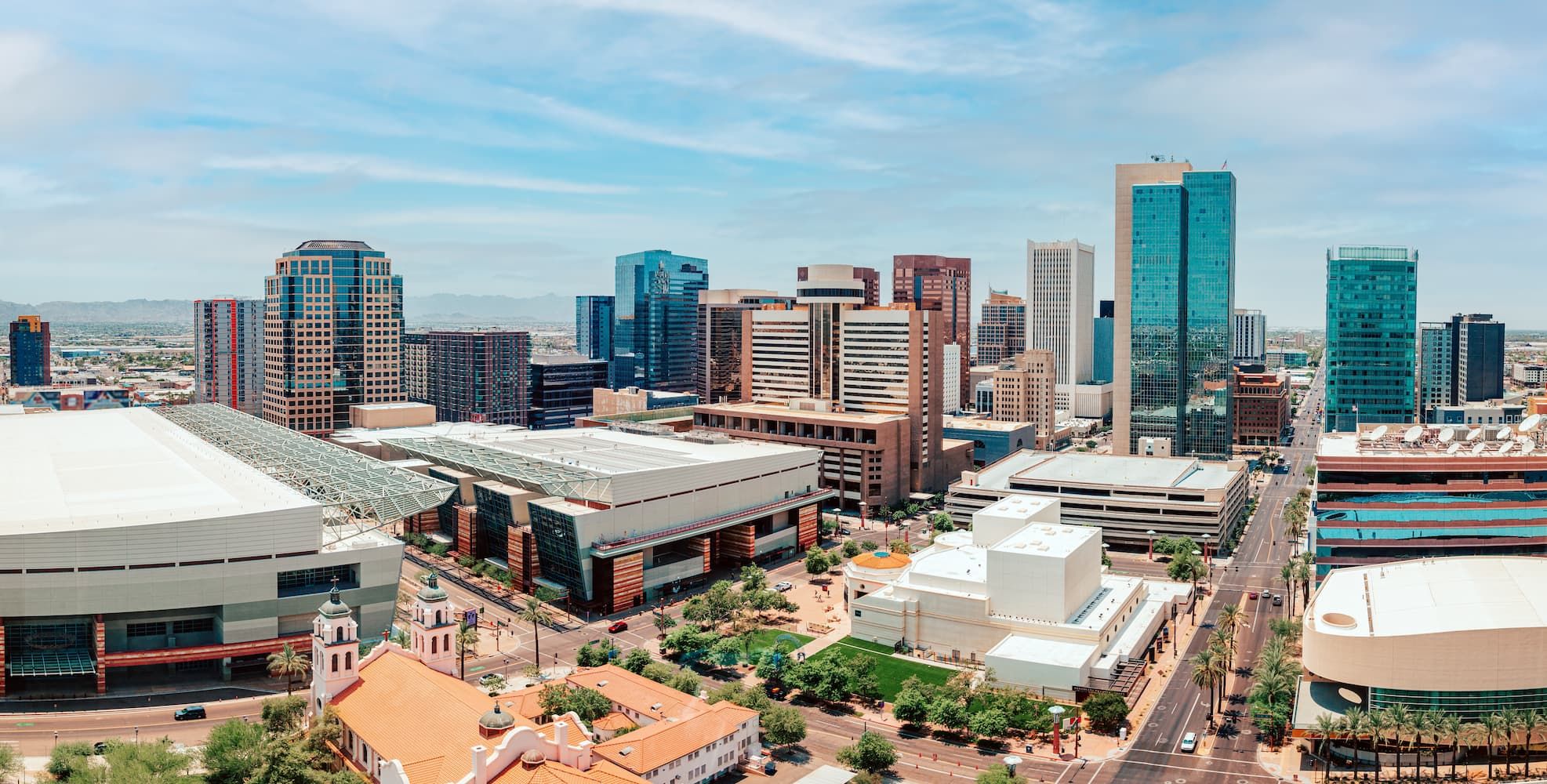
Phoenix has busy roadways and large intersections where multiple lanes, turning vehicles, and complex traffic patterns can increase pedestrian risk. Knowing which intersections have experienced higher rates of pedestrian crashes can help you better understand these risks and make more informed decisions when navigating Phoenix streets.
In this guide, The Husband & Wife Law Team examines the most dangerous intersections for pedestrians in Phoenix, the factors that contribute to crashes, and what you should know if you are injured in a pedestrian accident. We help Phoenix residents understand their rights and legal options when a collision occurs.
Where Are the Most Dangerous Intersections for Pedestrians in Phoenix?
Recent crash data from the Maricopa Association of Governments (MAG) and Arizona Department of Transportation (ADOT) identifies several Phoenix roadways and intersections with elevated pedestrian crash risks. While rankings can change as new data becomes available, recurring crash patterns can help highlight locations where pedestrians face greater safety concerns.
67th Avenue and McDowell Road
This West Valley intersection frequently records collisions involving walkers. High speed limits and heavy commercial traffic contribute to frequent hazards. Reports involving a 67th Ave and McDowell accident often involve failure to yield violations during peak hours.
99th Avenue and Lower Buckeye Road
Verified Phoenix pedestrian accident statistics highlight this area due to rapid growth and freight traffic. Wide lanes increase pedestrian exposure to fast vehicles.
Other High-Risk Phoenix Intersections
Corridors along 27th Avenue and Indian School Road, as well as 19th Avenue and Northern Avenue, record frequent pedestrian crashes. High foot traffic, bus stops, and lane transitions increase crossing hazards.
Why Are These Intersections So Dangerous for Pedestrians?
Certain roadway design features and driver behaviors can increase the risk of pedestrian collisions in Phoenix. Wide, multi-lane crossings can leave pedestrians exposed to traffic for longer periods, particularly when signal timing does not provide enough time to reach the opposite side and requires pedestrians to wait on narrow medians. Turning vehicles can create additional risks when opposing left-turn lanes or large trucks obstruct drivers’ views of crosswalks. Drivers turning right on red may also fail to check for pedestrians before proceeding. Other contributing factors can include speeding, running red lights, distracted driving, and failing to yield the right of way to pedestrians.
How to Stay Safer on Phoenix High-Risk Roads
Navigating busy arterial streets requires care. We encourage Phoenix pedestrians to follow these safety steps:
Use marked crosswalks and pedestrian signals whenever available.
Stay alert and watch for turning vehicles.
Make eye contact with drivers, but do not assume they will yield.
Allow enough time to cross safely.
Under Arizona law, drivers must slow down, stay attentive, and yield.
Even with safety precautions, crashes can happen because of driver actions or roadway conditions.
Injured at a Dangerous Phoenix Intersection? Know Your Legal Options
If you were injured at a dangerous Phoenix intersection, you do not have to navigate the legal process alone. The Husband & Wife Law Team can evaluate your accident, explain your options, and help you pursue the compensation you may be entitled to receive. Contact us today to schedule a consultation.
Image credit: // Shutterstock // Brandon Burris